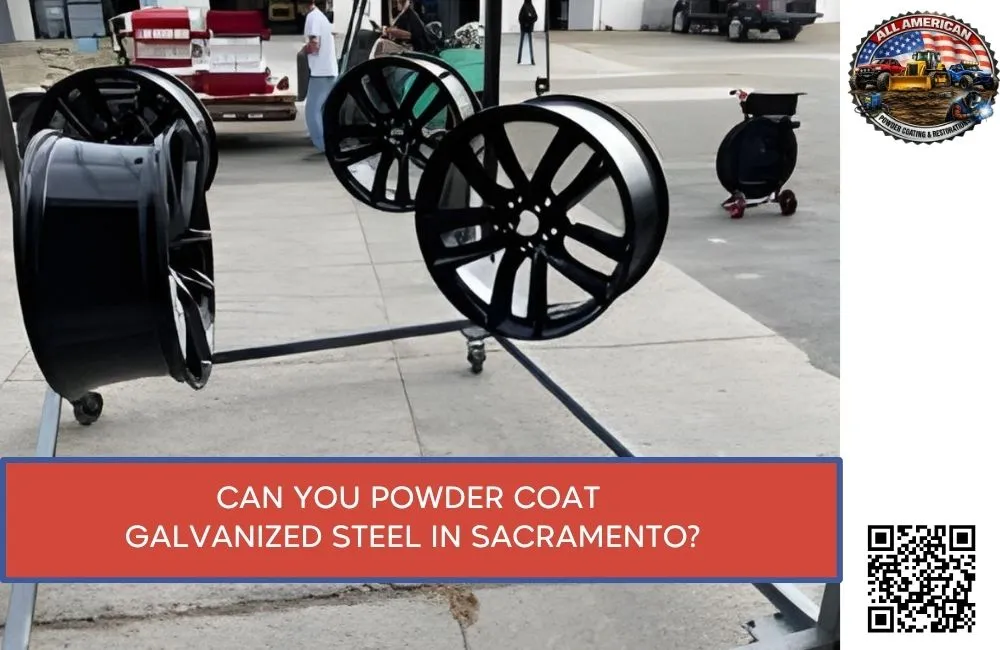
Can You Powder Coat Galvanized Steel in Sacramento?
Galvanized steel is widely used for outdoor structures, fencing, gates, railings, commercial equipment, and fabricated metal components. Its zinc coating helps protect the underlying steel from corrosion, making it a practical material for projects exposed to moisture and changing weather conditions.
But what happens when galvanized steel needs a different color, a smoother appearance, or an additional protective finish? Can it be powder coated without compromising the existing zinc layer?
Yes, galvanized steel can be powder coated, provided the surface is properly prepared and the coating process is compatible with the galvanizing. However, applying powder directly over untreated galvanized steel can lead to adhesion problems, bubbling, pinholes, and premature coating failure.
For homeowners, contractors, fabricators, and business owners in Sacramento, understanding these challenges can help prevent expensive refinishing mistakes.
This guide explains how powder coating works on galvanized steel, why preparation matters, and what to consider before refinishing galvanized metal components.
What Is Galvanized Steel?
Galvanized steel is carbon steel protected by a layer of zinc.
The zinc acts as a protective barrier and provides sacrificial corrosion protection. When the coating is damaged, nearby zinc can corrode preferentially, helping protect exposed steel.
Hot-dip galvanizing is one of the most common methods. During this process, fabricated steel is immersed in molten zinc, forming a protective coating bonded to the surface.
Galvanized steel is frequently used for fencing, structural supports, utility equipment, outdoor brackets, and commercial metalwork.
Although galvanizing provides corrosion resistance, its appearance may not suit every project.
Powder coating can add color and create a more uniform decorative finish while providing another protective layer.
Can Powder Coating Be Applied Directly to Galvanized Steel?
Powder coating can be applied over galvanized steel, but untreated galvanized surfaces are not always ready for coating.
Freshly galvanized metal may contain surface irregularities, zinc oxides, or residues that interfere with adhesion.
Older galvanized components may have accumulated dirt, grease, oxidation, and environmental contamination.
Without proper preparation, powder may fail to bond consistently.
A professional powder coating service should evaluate the condition of the zinc layer before determining the appropriate preparation process.
The objective is to create a clean, compatible surface without unnecessarily removing the corrosion protection provided by galvanizing.
What Is a Duplex Coating System?
A duplex coating system combines galvanizing with an additional protective coating, such as powder coating.
The galvanized zinc layer provides corrosion protection, while the powder coating adds a decorative barrier against environmental exposure.
When correctly designed and applied, the two coatings can work together to improve durability.
This approach is particularly useful for outdoor architectural metal, fencing, railings, and commercial components.
However, the benefits depend on proper surface preparation and compatibility between the galvanizing and powder coating system.
Simply adding powder over zinc does not automatically create a successful duplex system.
Why Is Surface Preparation So Important?
Galvanized steel behaves differently from bare steel during coating preparation.
The zinc layer may contain oxides, salts, surface contaminants, or passivation treatments that affect powder adhesion.
If these substances remain on the surface, the finished coating may peel or separate.
Cleaning methods must be selected carefully because aggressive treatment can damage or remove the zinc protection.
Depending on the condition of the metal and the coating specification, preparation may involve degreasing, rinsing, controlled surface treatment, or compatible chemical pretreatment.
Businesses comparing powder coating Sacramento providers should ask whether the shop has an appropriate process for galvanized substrates.
Preparation methods used for ordinary carbon steel should not automatically be applied to galvanized components.
Can Sandblasting Damage Galvanized Steel?
Yes, if the blasting process is too aggressive.
Traditional abrasive blasting can remove significant amounts of zinc, reducing the protection provided by galvanizing.
For some galvanized components, carefully controlled sweep blasting may be appropriate.
Sweep blasting uses suitable abrasive materials and controlled techniques to create a surface profile without unnecessarily stripping the zinc layer.
The correct method depends on the galvanizing condition, zinc thickness, component geometry, and coating requirements.
Heavy blasting should not be assumed necessary simply because a part will receive powder coating.
Preserving the underlying corrosion protection is an important part of the finishing process.
Why Does Powder Coating Bubble on Galvanized Steel?
Bubbling is one of the most common concerns when powder coating galvanized components.
Hot-dip galvanized surfaces can contain irregularities or microscopic areas that release trapped gases during heating.
When the metal enters the curing oven, these gases may escape through the powder as it melts.
The result can be bubbles, pinholes, or small craters in the finished surface.
Contamination and moisture can contribute to similar defects.
These problems do not necessarily mean galvanized steel is unsuitable for powder coating. They indicate that preparation and curing conditions require careful control.
How Can Outgassing Be Reduced?
Outgassing can sometimes be reduced by preheating the galvanized component before powder application.
This process allows certain trapped gases and moisture to escape before the final coating is applied.
Some powder formulations are also designed to improve tolerance to outgassing.
However, preheating alone does not guarantee a defect-free finish.
The galvanizing quality, surface condition, preparation method, powder chemistry, and curing schedule all affect the result.
A qualified coating provider should evaluate the complete process rather than relying on one treatment to solve every problem.
Does Galvanized Steel Need a Special Powder Coating?
Not every powder formulation is equally suitable for galvanized steel.
The coating should be selected based on substrate compatibility, exposure conditions, and the intended use of the finished component.
For outdoor applications, exterior-grade polyester powder coatings are commonly considered because of their weathering and UV resistance.
Appropriate pretreatment or primer systems may also be necessary, depending on the specification.
A compatible coating system should be selected using manufacturer recommendations and recognized industry guidance.
The right choice depends on whether the component will be installed indoors, outdoors, or in a demanding commercial environment.
Can Powder Coating Improve Rust Resistance?
Yes, when properly applied as part of a compatible coating system.
Galvanizing already helps protect steel from corrosion. Adding powder coating creates another barrier that can reduce direct environmental exposure.
For Sacramento properties, this combination may be useful on exterior metalwork exposed to seasonal rain, irrigation, dust, and sunlight.
However, powder coating cannot compensate for damaged galvanizing or severely corroded steel.
Existing corrosion and coating defects should be evaluated before refinishing.
If the zinc layer has been significantly compromised, additional treatment may be necessary.
Is Powder Coating Galvanized Steel Good for Gates and Fences?
Galvanized steel is frequently used for outdoor gates, fencing, and railing systems.
Powder coating can improve the appearance of these components by adding consistent color and texture.
Black, bronze, gray, and other architectural finishes are popular choices for residential and commercial properties.
For homeowners in West Sacramento, Elk Grove, Roseville, and nearby communities, coated galvanized metal can complement exterior building materials and landscaping.
However, gate hinges, welded joints, drainage areas, and mounting hardware require special consideration.
The coating process should preserve proper movement and fit while protecting exposed surfaces.
What About Galvanized Railings and Handrails?
Galvanized railings may be suitable for powder coating when their surface condition and construction are compatible.
The finish can create a more uniform appearance across handrails, posts, brackets, and decorative components.
Outdoor railings also benefit from coating systems designed for sunlight and moisture exposure.
Before coating, welded areas and attachment points should be inspected.
Any necessary fabrication or structural repair should be completed before finishing.
Powder coating improves surface protection and appearance, but it does not strengthen damaged metal connections.
Can Commercial Galvanized Equipment Be Powder Coated?
Yes. Many galvanized commercial components can be candidates for powder coating.
Examples include equipment guards, fabricated brackets, metal supports, utility enclosures, and outdoor fixtures.
Commercial powder coating requires attention to consistency, especially when multiple components must match in color, coating thickness, and appearance.
Commercial clients may also have specific corrosion-resistance or performance requirements.
These should be established before selecting a coating system.
For contractors and fabricators, coordinating galvanizing and powder coating specifications early can help prevent compatibility problems during production.
Is Powder Coating Suitable for Galvanized Automotive Parts?
Some galvanized automotive components may be suitable, but the decision depends on their construction and function.
Automotive powder coating often involves brackets, supports, accessories, and removable metal parts.
If a component is galvanized, its zinc coating must be considered during preparation and curing.
Safety-critical parts require additional caution because dimensional tolerances, structural integrity, and manufacturer requirements may limit refinishing options.
The same applies to specialized wheel powder coating and rims powder coating projects.
Automotive wheels should not be assumed suitable for galvanizing or a particular thermal finishing process without manufacturer approval.
A coating method appropriate for a galvanized gate may not be suitable for a vehicle wheel.
Can Old Galvanized Steel Be Powder Coated?
Older galvanized steel can sometimes be refinished successfully.
However, its condition matters more than its age.
Weathered galvanizing may have zinc corrosion products, accumulated contamination, scratches, or areas where the protective zinc has deteriorated.
These conditions must be assessed before coating.
In some cases, metal restoration services may help prepare a component for refinishing.
Severely corroded or structurally weakened parts may require repair or replacement.
Applying a new decorative finish over unstable metal can conceal problems rather than correct them.
Does Powder Coating Change the Appearance of Galvanized Steel?
Yes.
Hot-dip galvanizing often produces a gray or silver finish with visible variations in texture.
Powder coating can provide a more consistent color and appearance.
However, powder coating does not automatically hide every surface irregularity.
Drips, rough areas, zinc buildup, and fabrication marks may remain visible beneath the finished coating.
Smooth, glossy powders can make certain imperfections more noticeable.
For architectural applications where appearance is important, the galvanizing finish should be evaluated before powder coating begins.
How Long Does Powder Coating Last on Galvanized Steel?
There is no single lifespan that applies to every project.
Durability depends on surface preparation, coating selection, application quality, environmental exposure, and maintenance.
A properly designed duplex system can provide long-term protection, but performance varies.
Outdoor components exposed to irrigation water, frequent handling, chemical contamination, or mechanical impacts may experience different wear patterns.
Routine inspection helps identify chips and damaged areas before corrosion becomes more extensive.
For businesses and homeowners, the most useful approach is to select a coating system appropriate for the expected conditions rather than relying on a general durability claim.
Can You Powder Coat Galvanized Steel Without Removing the Zinc?
Yes. In fact, preserving the zinc layer is usually an important objective when creating a duplex coating system.
Proper preparation should remove contaminants and establish suitable adhesion while minimizing unnecessary zinc loss.
This is why controlled surface treatment is important.
Completely stripping the galvanizing would remove much of the original corrosion protection.
The coating provider should determine whether the existing zinc layer is suitable for refinishing and what preparation method is appropriate.
Is Powder Coating Better Than Painting Galvanized Steel?
Both powder coating and liquid painting can be used on properly prepared galvanized steel.
Powder coating can offer a durable, uniform finish for suitable components that can be transported and cured in an oven.
Liquid painting may be more practical for large structures, installed metalwork, or components that cannot tolerate the curing process.
The better option depends on project size, access, coating specifications, appearance requirements, and expected exposure.
Neither method performs well when applied over contamination or an unsuitable surface.
For galvanized steel, proper preparation and coating compatibility matter more than choosing a finish based on popularity alone.
What Should Sacramento Clients Ask Before Powder Coating Galvanized Steel?
Before starting a project, confirm that the coating provider understands the type and condition of the galvanizing.
Ask whether the part requires specialized cleaning, controlled sweep blasting, compatible pretreatment, or preheating.
The intended installation environment should also be discussed.
Outdoor gates, commercial equipment, architectural fixtures, and automotive parts have different performance requirements.
Clients searching for a powder coating shop near me should provide photographs, approximate dimensions, and information about whether the metal is newly galvanized or previously installed.
Clear project details help determine whether powder coating is appropriate and what preparation may be necessary.
A Durable Finish Starts With Galvanizing Compatibility
Powder coating galvanized steel can provide both decorative appeal and additional corrosion protection, but success depends on treating the zinc-coated surface correctly.
Proper cleaning, controlled preparation, outgassing management, compatible powder selection, and appropriate curing all contribute to the final result.
For Sacramento homeowners, builders, fabricators, and commercial clients, these details are especially important when refinishing gates, railings, fencing, equipment, and outdoor metal structures.
The most effective approach is to evaluate the galvanizing before choosing a finishing process.
When the substrate and coating system are compatible, powder coating can help galvanized steel maintain an attractive appearance while supporting long-term protection.
For projects in West Sacramento and surrounding communities, All American Powder Coating & Restoration provides a local resource for discussing powder coating and metal finishing requirements. Galvanized steel projects should be evaluated individually to confirm preparation needs and coating compatibility.
All American Powder Coating & Restoration
3959 Commerce Dr, West Sacramento, CA 95691
Phone: +1 (916) 373-9949
