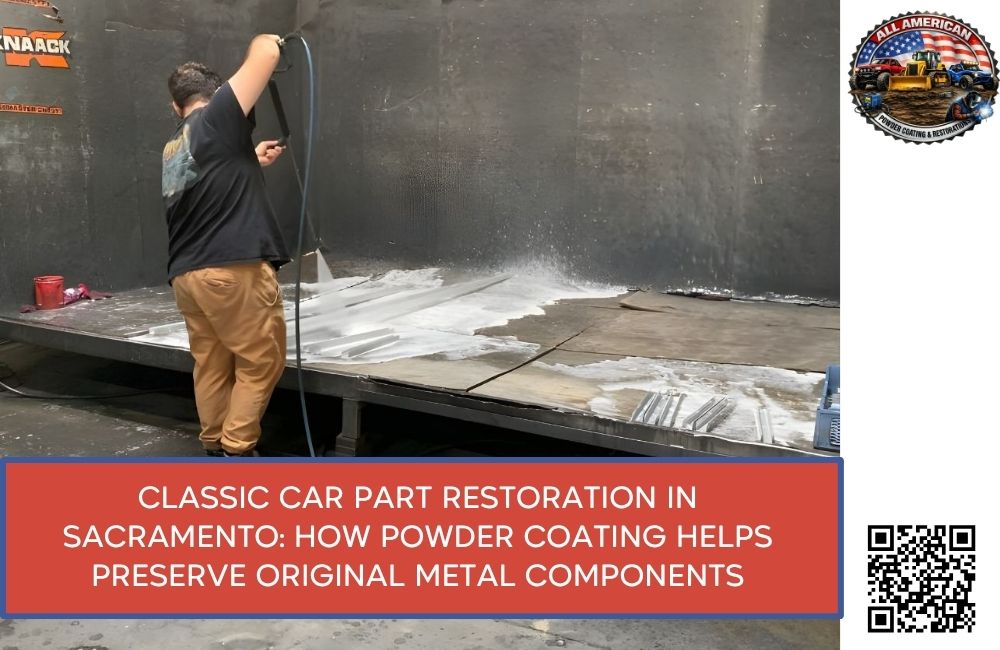
Classic Car Part Restoration in Sacramento: How Powder Coating Helps Preserve Original Metal Components
Classic car restoration is often about preserving what makes a vehicle special in the first place. Original brackets, wheels, suspension parts, engine-bay components, frames, and trim-related metal pieces may be difficult to replace, expensive to source, or important to the vehicle’s authenticity.
That is where professional powder coating can play a valuable role.
When original metal components are still structurally sound, careful restoration can remove rust, strip failed coatings, repair damaged areas, and protect the part with a durable new finish. For Sacramento collectors, builders, and restoration shops, the goal is not simply to make old parts look new. It is to preserve usable original metal while improving corrosion resistance, appearance, and long-term durability.
For anyone searching for powder coating near me, understanding the restoration process helps protect both the part and the value of the build.
Why Original Classic Car Parts Are Worth Preserving
Many older vehicles use metal components that are no longer manufactured or are only available as reproductions.
Original parts may have value because they:
Fit correctly without modification
Match factory dimensions
Preserve vehicle authenticity
Carry original casting or stamping details
Are difficult to replace
May be stronger than some reproduction parts
Help retain collector appeal
Replacing every worn component with a new reproduction may be convenient, but it can also remove some of the history and originality that make a classic vehicle unique.
Professional metal restoration services can help determine which parts are worth preserving and which should be replaced for safety.
What Classic Car Parts Can Be Restored?
Many removable steel and aluminum components can be candidates for restoration and refinishing.
Common projects include:
Wheels and rims
Brake calipers
Valve covers
Suspension components
Control arms
Brackets and mounts
Chassis parts
Subframes
Battery trays
Engine-bay pieces
Seat frames
Crossmembers
Motorcycle-related components
Custom fabricated restoration parts
A qualified powder coating shop near me should inspect each part before refinishing and confirm whether the metal is structurally sound.
How Powder Coating Helps Preserve Original Metal
Powder coating is a dry finishing process in which electrostatically charged powder is applied to prepared metal and cured in an oven.
Once cured, the coating forms a bonded protective layer that can help resist:
Moisture
Corrosion
Chipping
Scratching
Road grime
Chemicals
UV exposure
Everyday wear
For classic vehicles that are driven, shown, stored, or regularly maintained, this added protection can help preserve restored metal for years.
Why Surface Preparation Matters in Classic Car Restoration
The quality of the final finish depends heavily on what happens before the powder is applied.
A new coating should never be placed over:
Rust
Old unstable paint
Grease
Oil
Silicone
Moisture
Corrosion
Welding residue
Surface contamination
Classic car parts often arrive with decades of paint, repairs, oil residue, road grime, and previous refinishing work. Removing those layers is essential.
Step 1: Inspecting the Original Part
The first step is determining whether restoration is safe and practical.
The shop should evaluate:
Cracks
Corrosion
Pitting
Bent sections
Weak welds
Damaged threads
Previous repairs
Missing metal
Structural fatigue
Heat damage
A new finish cannot compensate for unsafe metal. If the part has lost too much strength, replacement may be the better choice.
Step 2: Removing Old Paint and Coatings
Classic car components may have several generations of finish built up over time.
Removal may involve:
Chemical stripping
Sandblasting
Media blasting
Mechanical cleaning
A combination of methods
The process should be controlled carefully to preserve original details, stamped numbers, cast markings, and thin metal sections.
Step 3: Rust Removal and Surface Cleaning
Rust should be removed completely before refinishing.
Light surface corrosion may be addressed through blasting and cleaning. More advanced corrosion may require grinding, welding, reinforcement, or replacement of damaged sections.
Thorough degreasing is equally important because oil and grease can remain trapped in seams, pores, or cast surfaces.
If contamination remains during curing, it may create:
Pinholes
Bubbles
Fisheyes
Uneven texture
Poor adhesion
Step 4: Repairing the Metal Before Coating
All repairs should be completed before the powder coating process begins.
Classic car restoration may require:
Welding cracks
Rebuilding brackets
Repairing mounting tabs
Reinforcing weak areas
Replacing damaged sections
Correcting old repairs
Fabricating hard-to-find components
Once welding or grinding is complete, the part can be cleaned again and prepared for finishing.
Step 5: Masking Critical Surfaces
Accurate masking is especially important with automotive parts.
Threads, bearing surfaces, mounting points, electrical contacts, gasket surfaces, and other precision areas should remain coating-free.
Professional masking may use:
High-temperature tape
Silicone plugs
Caps
Custom fixtures
Thread protection
Poor masking can create fitment issues during reassembly.
Step 6: Applying the Powder and Curing
The selected powder is applied electrostatically and cured according to the product specifications.
Correct curing helps ensure:
Strong adhesion
Consistent color
Proper gloss
Durability
Chemical resistance
Under-curing can weaken the finish, while excessive heat can affect the color, coating, or part.
Choosing the Right Finish for a Classic Car
Not every classic restoration should look highly customized.
Some owners want a factory-inspired appearance, while others prefer a restomod or show-quality finish.
Common options include:
Gloss black
Satin black
Semi-gloss black
Silver
Gray
Bronze
Metallic finishes
Custom colors
Clear topcoats
Textured coatings
The right finish depends on the part, build style, originality goals, and maintenance preferences.
Wheel Powder Coating for Classic Cars
Wheels are among the most visible components on any restoration.
Professional wheel powder coating can restore old wheels that have:
Faded finishes
Surface corrosion
Cosmetic scratches
Peeling paint
Minor pitting
Mismatched colors
Before refinishing, wheels should be inspected for cracks, bends, damaged lug holes, and unsafe repairs.
Rims Powder Coating for Factory or Custom Builds
Rims powder coating can be used to recreate a clean factory-inspired look or create a custom finish.
Popular options may include:
Gloss black
Satin black
Silver
Gunmetal
Bronze
Metallic colors
Clear-coated finishes
The best choice should complement the body, trim, brake components, and overall restoration style.
Brake Calipers and Suspension Parts
Classic brake calipers and suspension components may benefit from powder coating after they are properly restored.
Common projects include:
Caliper bodies
Control arms
Springs
Crossmembers
Brackets
Subframes
Chassis components
These parts often experience road grime, moisture, heat, and abrasion, so preparation quality is essential.
Safety-critical parts should always be inspected carefully before refinishing.
Engine-Bay Components
Engine bays are highly visible at shows and during restoration inspections.
Common powder coating projects include:
Valve covers
Battery trays
Brackets
Intake-related components
Accessory mounts
Small fabricated pieces
Professional automotive powder coating can help create a clean, coordinated engine-bay appearance while protecting suitable metal components.
Heat exposure should always be considered when selecting the coating.
Powder Coating vs. Traditional Paint for Classic Cars
Both powder coating and liquid paint have a place in restoration.
Advantages of Powder Coating
Powder coating may provide:
Strong adhesion
Durable coverage
Good chip resistance
Corrosion protection
Even application
Minimal runs or drips
A broad range of finishes
When Traditional Paint May Be Better
Liquid paint may be preferred when:
Exact factory paint matching is required
Multi-color details are needed
The part cannot tolerate oven curing
The component is too large for coating equipment
A specific historical finish must be duplicated
For concours-level restorations, authenticity may matter more than durability. For driver-quality or restomod builds, powder coating can offer an excellent balance of appearance and protection.
Commercial Powder Coating for Restoration Shops
Professional restoration shops, custom builders, wheel specialists, and automotive businesses may need recurring finishing support.
Commercial powder coating can help with:
Batch restoration work
Multiple wheel sets
Suspension components
Engine-bay parts
Brackets and hardware
Custom fabricated pieces
Repeat colors and finishes
Commercial clients should look for organized part tracking, consistent preparation, dependable scheduling, and repeatable finish quality.
Why Part Tracking Matters on Detailed Builds
Classic restorations often involve dozens or hundreds of small components.
A professional shop should have a clear process for:
Labeling parts
Grouping components
Tracking batches
Separating customer projects
Protecting finished parts
Verifying counts before pickup
This becomes especially important with rare or irreplaceable original pieces.
What Affects Classic Car Powder Coating Cost?
Pricing depends on several factors, including:
Part size
Quantity
Existing finish
Rust severity
Stripping time
Sandblasting
Repairs
Masking complexity
Powder color
Multi-stage finishes
Clear coats
Handling requirements
A clean bracket requires far less preparation than a heavily rusted frame component or a complete set of wheels.
How to Choose a Powder Coating Shop in Sacramento
When searching for powder coating Sacramento services, ask about the full restoration process.
Useful questions include:
How are original finishes removed?
Can delicate or rare parts be handled carefully?
Is sandblasting performed in-house?
How is rust evaluated?
Can the shop perform welding or fabrication?
How are threads and mounting areas protected?
Are parts labeled and tracked?
Can factory-inspired colors be matched?
Can the shop handle complete restoration batches?
Is pickup and delivery available?
The right shop should understand that classic car parts are not just generic metal pieces. Some may be rare, original, expensive, or impossible to replace.
Classic Car Part Restoration Near Sacramento
All American Powder Coating & Restoration provides classic automotive restoration, sandblasting, welding, fabrication, metal restoration, and professional powder coating from its West Sacramento location.
The shop serves collectors, restoration specialists, builders, and vehicle owners throughout Sacramento, West Sacramento, Roseville, Elk Grove, Folsom, Rocklin, Citrus Heights, Rancho Cordova, Davis, Woodland, and surrounding Northern California communities.
Projects may include wheels, suspension parts, brake components, valve covers, engine-bay pieces, brackets, frames, off-road parts, and full restoration batches.
Frequently Asked Questions
Is powder coating good for classic car parts?
Yes, for many suitable metal components. It can provide durable protection and a clean finish, especially for driver-quality restorations and restomods.
Can rusty original parts be saved?
Often, yes. Surface rust can usually be removed, but severe corrosion or structural damage may require repairs or replacement.
Can original wheels be powder coated?
Yes, if they are structurally sound and properly inspected, stripped, prepared, masked, and cured.
Does powder coating reduce collector value?
It depends on the vehicle and restoration goal. Concours restorations may prioritize factory-original finishes, while driver-quality and custom builds may benefit from the durability of powder coating.
Can rare brackets and hardware be powder coated?
Yes, provided the parts can tolerate curing temperatures and critical threads or fitted surfaces are properly protected.
Where can I get classic car parts powder coated in Sacramento?
All American Powder Coating & Restoration is located at 3959 Commerce Dr, West Sacramento, CA 95691 and serves classic car owners throughout the greater Sacramento area.
Preserve the Parts That Make Your Classic Unique
Classic car restoration is not only about replacing what looks old. It is about identifying what can be preserved, repairing what is worth saving, and protecting original components for the next chapter of the vehicle’s life.
Professional inspection, stripping, rust removal, welding, surface preparation, masking, and powder coating can help preserve valuable metal parts while giving them a durable, clean finish.
Contact All American Powder Coating & Restoration to discuss original wheels, brackets, suspension parts, engine-bay components, frames, or complete restoration batches.
All American Powder Coating & Restoration
3959 Commerce Dr West Sacramento, CA 95691, United States
Phone: +1 (916) 373-9949
