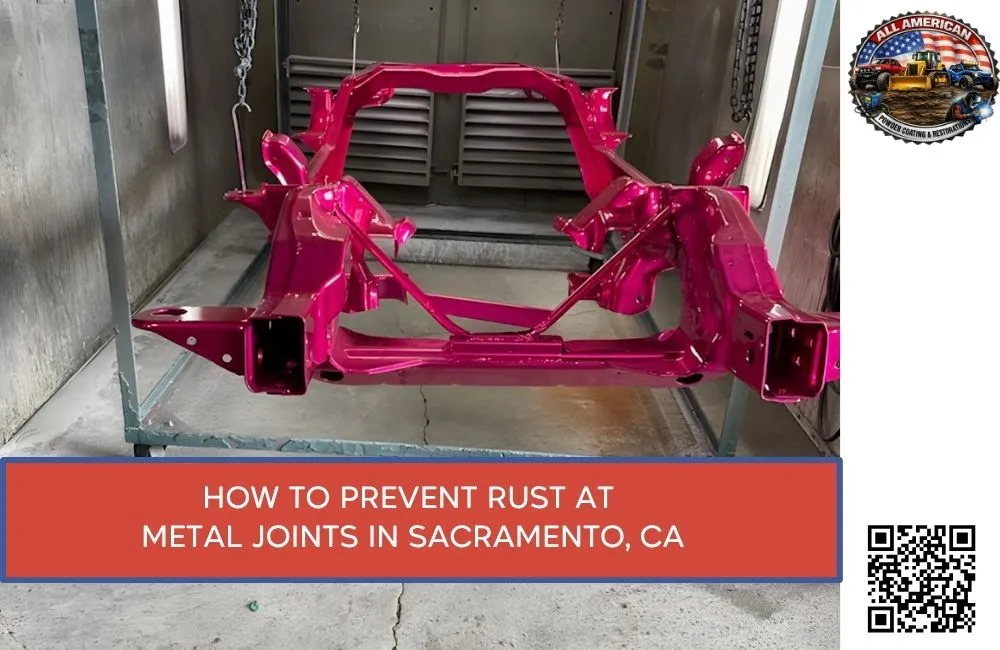
How to Prevent Rust at Metal Joints in Sacramento, CA
Rust often begins in places that are easy to overlook. A gate may look perfectly maintained across its larger surfaces while corrosion slowly develops around a hinge. A metal railing may have a clean finish, but small rust stains appear near welded connections. On vehicles and commercial equipment, bolts, brackets, and overlapping metal panels can develop corrosion long before the surrounding surfaces show damage.
These areas are vulnerable because metal joints collect moisture, dirt, and contaminants. They may also experience movement, friction, or stress that gradually damages protective coatings.
For homeowners, vehicle owners, contractors, and businesses in Sacramento, preventing rust at metal joints starts with understanding how corrosion develops and which protective methods work best.
Professional powder coating, proper fabrication, and regular maintenance can all help reduce corrosion. However, lasting protection requires more than covering visible rust with a fresh finish.
Why Does Rust Form Around Metal Joints?
Rust develops when iron or steel reacts with oxygen and moisture. Metal joints are particularly vulnerable because their design can trap water and make cleaning difficult.
Overlapping plates, welded seams, bolt connections, and narrow gaps create spaces where moisture can remain after rain, washing, or irrigation.
These areas may dry more slowly than exposed metal surfaces.
When water stays in contact with steel, corrosion can begin beneath paint or other protective coatings. Over time, rust may spread outward from the connection.
This type of corrosion is often associated with crevices, where trapped moisture creates conditions that accelerate metal deterioration.
Why Sacramento's Climate Still Creates Rust Problems
Sacramento is known for hot, dry summers, but that does not eliminate corrosion risks.
Winter rainfall introduces moisture to outdoor metal structures. Irrigation systems can repeatedly wet gates, fences, and landscaping fixtures throughout the warmer months.
Morning condensation may also collect on exposed metal.
Dust and debris can accumulate around joints, holding moisture against the surface after watering or rain.
For properties in West Sacramento, Elk Grove, Roseville, Davis, and surrounding communities, the combination of seasonal moisture and outdoor exposure makes proper metal protection important.
The greatest concern is often not how much rain falls, but how long moisture remains trapped around vulnerable connections.
How to Identify Early Rust at Metal Connections
Rust around joints does not always begin as large orange patches.
Early warning signs may include small brown stains around bolts, slight discoloration near welds, bubbling paint, or roughness along metal seams.
A powder-coated surface may develop small raised areas when corrosion begins underneath.
On gates and railings, rust may first appear where two metal components meet.
Vehicle owners may notice corrosion around suspension brackets, mounting points, or exposed fasteners.
Identifying these changes early can prevent minor surface deterioration from becoming a more complicated repair.
If a joint is cracked, loose, distorted, or structurally weakened, it should be inspected before continued use.
Why Welded Joints Need Special Attention
Welded connections are common in gates, fences, railings, automotive frames, and fabricated equipment.
Although properly completed welds provide strong connections, the surrounding surfaces can be difficult to protect.
Welding may leave spatter, rough transitions, or surface contamination that interferes with coating adhesion.
Sharp edges and irregular weld profiles can also create areas where protective finishes become thinner.
Before applying a coating, welded surfaces should be inspected and cleaned.
Appropriate grinding and finishing can improve coating coverage, provided these operations do not compromise the weld's structural integrity.
For Sacramento fabrication projects, completing welding and inspection before surface finishing helps reduce the risk of corrosion developing around repaired connections.
Can Powder Coating Prevent Rust at Metal Joints?
Yes. Properly applied powder coating can help protect steel joints by creating a barrier against moisture and environmental exposure.
However, powder coating does not make a metal connection completely rust-proof.
The coating must adhere properly, cover accessible surfaces, and remain intact during use.
If water enters through a damaged area or an uncoated crevice, corrosion may still develop underneath.
This is particularly important for overlapping joints that cannot be fully coated after assembly.
A professional powder coating service should consider the joint's design, surface accessibility, and intended environment before finishing.
Why Joint Design Matters Before Coating
Some corrosion problems begin with the way metal components are assembled.
Two overlapping steel plates may create a narrow gap where water enters but cannot drain easily.
A horizontal bracket may collect rainwater around its mounting bolts.
An enclosed metal section may trap condensation if drainage is inadequate.
These conditions cannot always be corrected by applying a thicker coating.
During fabrication, designers should consider drainage, access for cleaning, and whether the connection can be adequately protected.
Where appropriate, sealing methods or design changes may help reduce moisture retention.
However, sealants should be selected carefully because unsuitable products can trap moisture or interfere with future repairs.
How Surface Preparation Helps Prevent Corrosion
Protective coatings perform best when applied to clean, properly prepared metal.
Rust, grease, mill scale, old paint, and welding residue can prevent a finish from bonding consistently.
For suitable steel components, abrasive blasting may help remove contamination and create an appropriate surface profile.
Complex joints require particular attention because narrow corners and recessed areas are harder to reach.
If corrosion remains hidden inside a joint, coating the exterior may not stop it from progressing.
Clients comparing powder coating Sacramento services should ask how welded connections, seams, and difficult-to-access areas are prepared before coating.
Should Rust Be Removed Before Refinishing?
Yes. Existing rust should be addressed before applying a new protective finish.
Light surface corrosion may be removable through suitable cleaning and abrasive preparation.
More extensive rust can create pits, weaken connections, or damage the surrounding metal.
In these situations, metal restoration services may involve additional evaluation, repair, or replacement of affected components.
Simply painting or powder coating over rust can conceal deterioration without resolving the underlying problem.
For load-bearing structures, vehicle components, and safety-related connections, structural condition should be assessed before cosmetic refinishing begins.
How to Protect Bolted Metal Connections
Bolted joints are particularly susceptible to corrosion because fasteners create contact points between multiple surfaces.
Moisture can collect beneath bolt heads, washers, and mounting plates.
Repeated tightening or movement may also damage the protective coating.
Using corrosion-resistant fasteners and appropriate protective treatments can help reduce these problems.
However, fastener selection must account for strength requirements and compatibility with the surrounding metal.
Certain dissimilar metal combinations can increase galvanic corrosion when moisture is present.
The correct hardware should therefore be selected based on the application rather than appearance alone.
What Is Galvanic Corrosion?
Galvanic corrosion can occur when different metals are electrically connected in the presence of an electrolyte, such as water containing dissolved salts.
For example, certain combinations of aluminum and steel may create conditions that accelerate corrosion of one material.
This can affect mounting brackets, fasteners, automotive components, and architectural metal assemblies.
Insulating washers, compatible hardware, protective coatings, and suitable joint design may help reduce the risk.
The best solution depends on the metals involved and their operating environment.
For outdoor installations, material compatibility should be considered during fabrication rather than after corrosion appears.
Preventing Rust on Metal Gates and Fences
Metal gates and fences contain numerous corrosion-prone connections.
Hinges, welded corners, decorative joints, and mounting brackets may collect moisture or experience repeated movement.
Regular inspection is especially important near the bottom of gates, where irrigation water and landscaping debris may accumulate.
Keep vegetation away from metal surfaces where practical, and adjust sprinklers to reduce repeated exposure.
Clean dirt from hinge areas and check for chipped finishes.
If rust appears beneath a protective coating, evaluate the extent of corrosion before applying a touch-up product.
For older structures, professional refinishing may provide more complete protection than repeated cosmetic repairs.
Protecting Outdoor Railings and Handrails
Railings are frequently exposed to moisture, handling, and temperature changes.
Rust may develop near welded posts, mounting plates, and connections to concrete surfaces.
Water collecting around base plates can be especially problematic.
Proper drainage and suitable installation details help reduce prolonged moisture exposure.
Exterior-rated coatings can provide additional protection, but they should be selected for the railing's material and environmental conditions.
A railing with loose anchors or weakened welds requires structural attention before refinishing.
For Sacramento homeowners, regular inspection of outdoor railings is an important part of property maintenance.
Rust Prevention for Automotive Brackets and Mounts
Vehicles experience corrosion conditions that differ from residential metal structures.
Road spray, dirt, vibration, heat, and repeated mechanical stress can affect exposed brackets and mounting hardware.
Automotive powder coating is commonly used on suitable suspension components, frames, brackets, and accessories.
However, mounting surfaces, threads, and precision connections may require masking to preserve proper fit.
Coating thickness should not interfere with fastener engagement or component alignment.
Vehicle owners should also inspect joints after impacts or repairs because damaged coating can expose steel to moisture.
Structural and safety-critical components must be evaluated according to manufacturer requirements.
Why Wheel and Rim Connections Need Care
Vehicle wheels contain areas where moisture, brake dust, and road contamination can accumulate.
Around lug openings and mounting surfaces, proper fit and contact are essential.
Wheel powder coating can improve the appearance and surface protection of compatible wheels, but critical mounting surfaces may need to remain free of coating.
The same applies to rims powder coating, where excessive buildup can interfere with component installation.
Cleaning around lug openings and inspecting chipped areas can help identify developing corrosion.
Any refinishing process must preserve wheel integrity and comply with manufacturer specifications.
Rust Prevention for Commercial Metal Equipment
Commercial equipment often contains numerous bolted and welded connections.
Machine guards, mounting brackets, fabricated supports, and outdoor equipment frames may experience repeated handling, vibration, and environmental exposure.
Commercial powder coating can help protect suitable metal components when the finish is selected for their operating conditions.
However, coating alone cannot prevent corrosion caused by poor drainage, incompatible materials, or damaged connections.
Maintenance teams should pay attention to joints that collect dirt, oil, or moisture.
Regular inspections can identify small coating failures before they affect larger sections of equipment.
For Sacramento businesses, preventing corrosion can also help reduce avoidable maintenance and refinishing work.
How to Clean Metal Joints Without Damaging the Finish
Routine cleaning helps remove contaminants that hold moisture against metal surfaces.
For most powder-coated components, mild detergent, water, and a soft brush are appropriate.
Pay attention to corners, seams, and areas around fasteners.
Avoid aggressive wire brushing on intact coatings because scratches can expose the underlying metal.
After cleaning, allow joints to dry thoroughly.
Where water repeatedly collects, investigate whether the design or surrounding conditions can be improved.
Cleaning is useful for maintenance, but it will not repair corrosion that has already developed beneath a protective finish.
When Should a Rusted Joint Be Repaired or Replaced?
The decision depends on the extent of corrosion and the joint's function.
Minor surface rust on a nonstructural component may be suitable for cleaning and refinishing.
Deep pitting, cracked welds, loose connections, or significant metal loss require closer evaluation.
For gates, railings, trailers, vehicles, and commercial equipment, weakened connections can create safety risks.
A qualified fabricator or repair professional should determine whether the affected area can be restored or requires replacement.
A new coating should only be applied after the underlying metal is suitable for continued use.
Choosing a Powder Coating Shop for Metal Joint Protection
When searching for a powder coating shop near me, look beyond color selection.
Ask how the shop evaluates existing corrosion, prepares welded areas, handles difficult corners, and selects coatings for outdoor exposure.
For components with tight-fitting connections, discuss masking and coating thickness.
If the metal requires welding or fabrication, those repairs should generally be completed before final finishing.
Clear communication about how the component will be used helps determine the most appropriate preparation and protective coating.
Long-Term Rust Prevention Starts With Better Maintenance
Preventing rust at metal joints requires a combination of sound fabrication, appropriate materials, effective surface preparation, protective coatings, and regular inspection.
Sacramento's seasonal rainfall, summer irrigation, and everyday outdoor exposure make these practices valuable for residential, automotive, and commercial metalwork.
The most effective approach is to address moisture retention and coating damage before corrosion spreads.
For homeowners, vehicle owners, contractors, and businesses, maintaining welded seams, bolts, brackets, and mounting points can help preserve both appearance and function.
When corrosion has already developed, professional evaluation can determine whether cleaning, repair, metal restoration, or refinishing is appropriate.
All American Powder Coating & Restoration provides powder coating and metal finishing services in West Sacramento for suitable residential, automotive, and commercial components.
All American Powder Coating & Restoration
3959 Commerce Dr, West Sacramento, CA 95691
Phone: +1 (916) 373-9949
