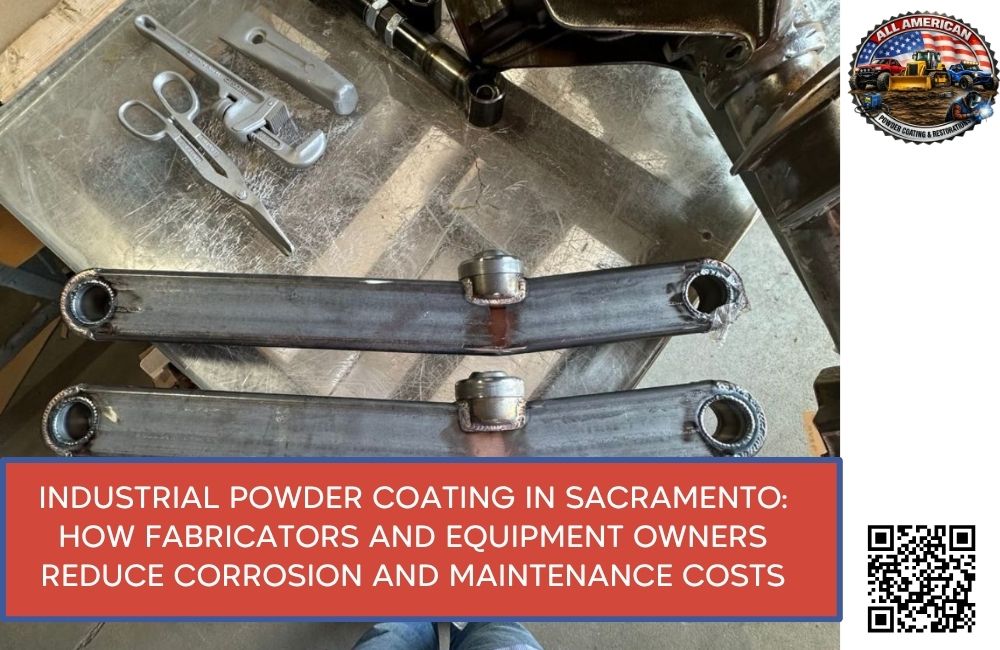
Industrial Powder Coating in Sacramento: How Fabricators and Equipment Owners Reduce Corrosion and Maintenance Costs
Industrial metal parts are built to work hard, but constant exposure to moisture, chemicals, abrasion, heat, dust, and outdoor conditions can wear down even durable surfaces. When coatings fail, corrosion can spread, maintenance becomes more frequent, and equipment may need to be repaired or replaced sooner than expected.
Professional Commercial powder coating gives Sacramento fabricators, contractors, equipment owners, and commercial operators a practical way to protect metal components while maintaining a clean, professional finish. When combined with proper blasting, cleaning, repair, and curing, powder coating can reduce surface deterioration and help extend the usable life of equipment and fabricated parts.
For businesses searching for powder coating near me, the most important factor is not simply choosing a color. The real value comes from selecting the right coating system for the part, the environment, and the level of use.
What Is Industrial Powder Coating?
Industrial powder coating is a dry finishing process used to protect steel, aluminum, and other suitable metal parts.
The process typically includes:
Inspecting the metal
Removing rust and failed coatings
Sandblasting or media blasting
Cleaning and degreasing
Repairing damaged areas
Masking critical surfaces
Applying electrostatically charged powder
Curing the coating in an oven
Inspecting the final finish
Once cured, the powder creates a hard, bonded surface that can help resist corrosion, chips, scratching, chemicals, moisture, and general wear.
Why Industrial Businesses Use Powder Coating
Commercial and industrial parts often face more demanding conditions than decorative metal.
Common challenges include:
Frequent handling
Outdoor exposure
Equipment vibration
Chemicals
Grease and oil
Abrasion
Impact
Sunlight
Moisture
Temperature changes
A professional powder coating service can help protect suitable parts while also improving appearance and reducing the need for frequent repainting.
How Powder Coating Helps Reduce Corrosion
Corrosion begins when metal is exposed to moisture, oxygen, chemicals, or other aggressive conditions.
Once rust develops, it can spread beneath weak coatings and gradually reduce the thickness and strength of the metal.
Powder Coating Creates a Protective Barrier
When the surface is properly prepared, the cured coating helps isolate the metal from moisture and environmental contamination.
This can be especially valuable for:
Equipment frames
Outdoor machinery
Trailer parts
Gates and railings
Fabricated brackets
Structural supports
Metal enclosures
Storage racks
Commercial fixtures
Automotive components
The coating does not make metal immune to damage, but it can significantly slow surface deterioration.
Surface Preparation Is Essential
Powder coating should never be applied over:
Rust
Grease
Oil
Silicone
Failed paint
Loose scale
Moisture
Welding residue
Dirt
If contamination remains, the coating may bond to the unstable material rather than the metal itself.
That can lead to:
Peeling
Bubbling
Pinholes
Fisheyes
Uneven texture
Premature corrosion
How Powder Coating Can Reduce Maintenance Costs
Maintenance costs increase when equipment requires repeated repainting, corrosion repair, rust removal, or component replacement.
A durable finish can help reduce some of these recurring needs.
Less Frequent Repainting
Powder coating generally provides thicker and more consistent coverage than basic spray-paint applications.
For suitable industrial parts, that can mean fewer touch-ups and refinishing cycles.
Easier Cleaning
Smooth powder-coated surfaces are often easier to clean than bare steel, peeling paint, or rusted metal.
This may help reduce labor spent removing:
Dirt
Grease
Dust
Road grime
Light chemical residue
Surface contamination
Longer Service Life for Metal Components
Protecting the surface can help preserve the underlying metal.
That may reduce the frequency of:
Rust repair
Part replacement
Structural reinforcement
Surface restoration
Downtime caused by corrosion-related work
For businesses, the real value is often measured over the life of the equipment rather than by the initial coating cost alone.
Industrial Powder Coating for Fabricators
Fabricators often need a finishing partner after welding and assembly are complete.
Common fabricated parts include:
Frames
Brackets
Supports
Equipment stands
Structural assemblies
Machine guards
Enclosures
Storage racks
Custom mounts
Trailer components
A professional commercial powder coating provider can help create a consistent finish across single parts, small batches, or recurring production work.
Why Fabrication Must Be Completed Before Coating
All cutting, welding, drilling, and grinding should be completed before the final finish is applied.
Performing fabrication after coating can:
Burn the finish
Expose bare metal
Create corrosion points
Require touch-up work
Reduce overall finish quality
The preferred workflow is:
Complete fabrication
Inspect the part
Repair defects
Strip or blast the metal
Clean and degrease
Mask critical areas
Apply powder
Cure
Inspect
This sequence helps preserve both structural quality and finish consistency.
Industrial Equipment That Can Be Powder Coated
Many removable industrial and commercial metal parts can be coated if they fit the equipment and can tolerate curing temperatures.
Potential projects include:
Equipment frames
Machine guards
Control boxes
Metal enclosures
Shelving
Storage racks
Brackets
Stands
Safety barriers
Trailer parts
Gates
Railings
Fabricated panels
Commercial furniture
Automotive components
A qualified powder coating shop near me should confirm part size, metal type, condition, and intended use before recommending a coating system.
Why Sandblasting Matters for Industrial Parts
Industrial components often arrive with:
Rust
Mill scale
Old paint
Grease
Welding discoloration
Chemical residue
Surface oxidation
Sandblasting or media blasting removes these contaminants and creates a surface profile that improves adhesion.
Matching the Blasting Process to the Metal
Heavy steel may tolerate aggressive abrasive preparation, while aluminum, thinner parts, and detailed components require more control.
The wrong media or pressure can damage the surface or distort lightweight parts.
Cleaning and Degreasing Used Equipment
Used industrial parts are often heavily contaminated.
Possible residues include:
Oil
Hydraulic fluid
Grease
Coolant
Fuel
Cutting lubricants
Silicone
Adhesives
These materials can remain trapped in seams, pores, and welded joints.
When heated during curing, trapped contaminants may escape and cause bubbles or pinholes.
Pre-baking, extended degreasing, or additional cleaning may be required for used equipment.
When Metal Restoration Services Are Needed
Some industrial parts require more than blasting and coating.
Professional metal restoration services may be appropriate when a component has:
Deep rust
Pitting
Cracked welds
Broken brackets
Bent sections
Missing material
Previous failed repairs
Worn mounting points
Restoration may include:
Welding
Grinding
Reinforcement
Replacement sections
Custom fabrication
Rust removal
Surface correction
Coating should only begin after the part is structurally ready.
Powder Coating for Automotive and Fleet Equipment
Industrial and commercial shops may also need automotive powder coating for fleet, truck, trailer, or equipment-related parts.
Common projects include:
Wheels
Suspension components
Brackets
Frames
Engine-bay parts
Truck accessories
Off-road components
Trailer hardware
Wheel Powder Coating
Professional wheel powder coating can restore worn finishes and help protect wheels from corrosion and road wear.
Before coating, wheels should be inspected for:
Cracks
Bends
Deep corrosion
Damaged mounting surfaces
Unsafe previous repairs
Rims Powder Coating
Rims powder coating allows businesses or vehicle owners to select durable custom finishes for suitable wheels.
Common choices may include:
Gloss black
Satin black
Silver
Gunmetal
Bronze
Metallic shades
Custom colors
Choosing the Right Industrial Powder
The correct powder depends on the operating environment.
A coating provider should consider:
Indoor or outdoor use
Moisture
UV exposure
Heat
Chemicals
Abrasion
Required color
Gloss level
Frequency of cleaning
Expected service life
Some parts may need high-temperature powder, exterior-grade coatings, or specialty formulations.
Using a generic powder for every project can lead to poor performance.
Powder Coating vs. Traditional Industrial Paint
Both powder coating and liquid paint have useful applications.
Advantages of Powder Coating
Powder coating can provide:
Strong adhesion
Durable coverage
Consistent application
Good chip resistance
Corrosion protection
Minimal runs or drips
Efficient batch processing
When Paint May Be Better
Liquid paint may be more practical when:
The part is too large for curing equipment
On-site finishing is required
The item cannot tolerate oven heat
Exact paint matching is needed
A small field repair is required
Heat-sensitive materials cannot be removed
The best finish should be selected based on the application, not habit.
What Affects Industrial Powder Coating Cost?
Pricing may depend on:
Part size
Quantity
Metal type
Existing coatings
Rust severity
Sandblasting time
Degreasing
Repairs
Masking complexity
Powder type
Specialty colors
Part tracking
Commercial scheduling
Pickup and delivery
Batching similar parts may improve efficiency and reduce setup time.
How Businesses Can Reduce Coating Costs
Commercial customers can help streamline the process by:
Grouping similar parts
Removing unnecessary hardware
Providing clean parts when practical
Finalizing fabrication before delivery
Standardizing colors
Providing clear masking instructions
Labeling parts
Planning recurring batches
Sharing drawings or specifications
Clear communication reduces rework and helps the shop prepare the project more efficiently.
Choosing an Industrial Powder Coating Shop in Sacramento
When comparing providers for powder coating, ask about more than price.
Useful questions include:
Is sandblasting available in-house?
How is rust handled?
Can the shop perform welding or fabrication?
What part sizes can be handled?
What powders are recommended for the environment?
Can the shop manage recurring commercial batches?
How are parts tracked?
How are threads and machined surfaces protected?
Is pickup and delivery available?
What turnaround should be expected?
A shop that can handle preparation, repair, and finishing under one roof may reduce handoffs and simplify project coordination.
Industrial Powder Coating in West Sacramento
All American Powder Coating & Restoration provides industrial and commercial powder coating, sandblasting, metal restoration, welding, fabrication, and surface finishing from its West Sacramento facility.
The shop serves fabricators, contractors, equipment owners, automotive businesses, property managers, and commercial clients throughout Sacramento, West Sacramento, Elk Grove, Roseville, Folsom, Rocklin, Davis, Woodland, Rancho Cordova, Citrus Heights, and surrounding Northern California communities.
Projects may include:
Equipment frames
Commercial brackets
Fabricated assemblies
Trailer parts
Machine guards
Gates and railings
Storage systems
Automotive parts
Wheels
Commercial batches
Frequently Asked Questions
Is industrial powder coating good for outdoor equipment?
Yes, when the metal is properly prepared and the coating is designed for outdoor exposure.
Can rusty industrial parts be powder coated?
Yes, if the rust is removed and the remaining metal is structurally sound. Severe corrosion may require repairs first.
Is powder coating suitable for production batches?
Yes. It is commonly used for repeat or batch finishing when color, preparation, masking, and curing are standardized.
Can fabricated parts be powder coated immediately after welding?
They still need cleaning, surface preparation, and possibly blasting before coating.
Does powder coating eliminate maintenance?
No. It can reduce surface maintenance, but coated parts still require cleaning, inspection, and repair if the finish is deeply damaged.
Where can businesses find industrial powder coating in Sacramento?
All American Powder Coating & Restoration is located at 3959 Commerce Dr, West Sacramento, CA 95691 and serves commercial and industrial customers throughout the greater Sacramento region.
Protect Metal Equipment Before Corrosion Becomes Expensive
Corrosion is easier to control before it turns into structural damage, repeated downtime, or part replacement.
Proper blasting, cleaning, repair, masking, coating, and curing can help fabricators and equipment owners protect valuable metal while reducing the frequency of repainting and corrosion-related maintenance.
For equipment frames, brackets, trailers, fabricated assemblies, commercial fixtures, automotive parts, or production batches, contact All American Powder Coating & Restoration to discuss your project requirements and coating options.
All American Powder Coating & Restoration
3959 Commerce Dr West Sacramento, CA 95691, United States
Phone: +1 (916) 373-9949
