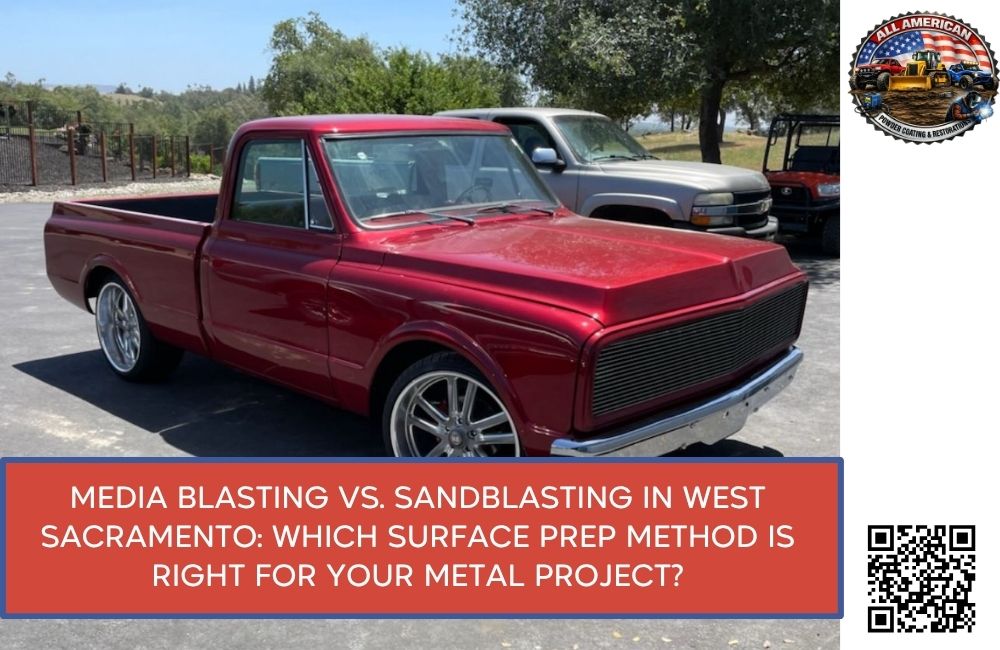
Media Blasting vs. Sandblasting in West Sacramento: Which Surface Prep Method Is Right for Your Metal Project?
A durable metal finish starts with the surface underneath it. Whether you are restoring automotive parts, refinishing wheels, cleaning patio furniture, repairing gates, or preparing commercial equipment, choosing the right blasting method can directly affect adhesion, appearance, and long-term durability.
For customers searching for powder coating near me in West Sacramento, two terms come up often: media blasting and sandblasting. They are related, but they are not always the same process, and the best choice depends on the metal, the existing coating, the amount of corrosion, and how delicate the part is.
This guide explains the difference between media blasting and sandblasting, when each method makes sense, and why professional surface preparation is essential before powder coating.
What Is Sandblasting?
Sandblasting is a common term for abrasive blasting, a process that propels abrasive material against a metal surface at high pressure.
The goal is to remove unwanted material such as:
Rust
Paint
Old powder coating
Scale
Oxidation
Surface contamination
Corrosion
Although the word “sand” is still widely used, professional shops often use other abrasive materials because traditional silica sand is not suitable for every application.
Possible blasting materials can include:
Aluminum oxide
Garnet
Crushed glass
Steel grit
Glass bead
Other specialized abrasives
The media, pressure, and blasting technique should be selected based on the part.
What Is Media Blasting?
Media blasting is a broader term that refers to using different types of abrasive or non-abrasive media to clean and prepare a surface.
In practice, media blasting gives a shop more flexibility because the material can be matched to the part.
For example, a heavy steel gate with thick rust may require a more aggressive media than an aluminum wheel or delicate motorcycle component.
Common Media Blasting Options
Depending on the application, shops may use:
Glass bead
Crushed glass
Aluminum oxide
Garnet
Steel shot or grit
Plastic media
Walnut shell
Other specialty media
The goal is not simply to remove the coating. It is to clean the metal while preserving the shape, detail, and integrity of the part.
Media Blasting vs. Sandblasting: What Is the Main Difference?
The biggest difference is flexibility.
Sandblasting usually refers to a more aggressive abrasive-cleaning process, while media blasting can involve a wider range of materials and surface profiles.
Sandblasting Is Often Better For:
Heavy rust
Thick steel
Old industrial coatings
Structural brackets
Gates and railings
Trailer parts
Equipment frames
Media Blasting Is Often Better For:
Aluminum
Wheels
Motorcycle parts
Thin metal
Decorative pieces
Delicate components
Parts with detailed surfaces
The right method depends on the metal, thickness, coating, and project goals.
Why Surface Preparation Matters Before Powder Coating
A professional powder coating service can only perform well if the surface is properly prepared.
Powder coating should not be applied over:
Loose rust
Flaking paint
Grease
Oil
Silicone
Moisture
Old unstable coatings
Welding contamination
If these materials remain, the new finish may develop:
Peeling
Bubbling
Fisheyes
Pinholes
Uneven texture
Poor adhesion
Premature corrosion
Blasting removes unstable material and creates a surface profile that helps the powder bond more securely.
When Sandblasting Makes More Sense
Sandblasting or aggressive abrasive blasting may be the right choice when the part is heavy, durable, and covered with substantial corrosion or old coating buildup.
Heavy Steel Gates and Railings
Outdoor gates and railings often develop:
Thick rust
Multiple paint layers
Scale
Chipped coatings
Corrosion around welds
A stronger blasting process can remove these layers quickly and expose the condition of the base metal.
Once the surface is clean, damaged sections can be repaired before refinishing.
Trailer and Equipment Parts
Commercial trailer ramps, brackets, frames, and heavy-duty equipment often need more aggressive preparation.
These parts may have:
Heavy corrosion
Thick industrial paint
Road grime
Grease
Impact damage
Welding residue
Blasting helps expose cracks, weak welds, and metal loss before repair and coating.
Commercial and Industrial Steel
For commercial powder coating, consistent surface preparation is important across multiple parts.
Heavy fabricated steel components may benefit from aggressive blasting that creates a uniform profile before coating.
When Media Blasting Is the Better Choice
More controlled media blasting is often appropriate for parts that are softer, thinner, or more detailed.
Aluminum Parts
Aluminum is softer than steel and can be damaged by aggressive blasting.
Too much pressure or the wrong abrasive can:
Distort thin sections
Create excessive roughness
Damage edges
Remove fine details
Affect machined surfaces
For aluminum parts, the media and blasting pressure should be carefully controlled.
Automotive Parts
Professional automotive powder coating often involves components with tight tolerances and detailed surfaces.
Suitable projects may include:
Valve covers
Brackets
Suspension parts
Brake calipers
Engine-bay components
Motorcycle parts
Off-road parts
These components often benefit from a blasting method that removes the old finish without damaging the part.
Wheel Powder Coating
Wheel powder coating requires particularly careful preparation.
Wheels may be made from aluminum or steel, and each material requires a different approach.
Before blasting, wheels should be inspected for:
Cracks
Bends
Deep corrosion
Damaged lug holes
Bead-seat damage
Unsafe repairs
A new finish cannot correct structural damage.
Rims Powder Coating
Professional rims powder coating begins with complete removal of the old finish and contamination.
The blasting process must preserve:
Lug holes
Mounting surfaces
Bead seats
Valve-stem areas
Wheel details
A controlled media blasting process is often preferable for aluminum wheels.
What Happens After Blasting?
Blasting is only one part of the surface preparation process.
A quality restoration typically follows several additional steps.
Step 1: Inspect the Bare Metal
Once the coating is removed, the shop can identify:
Cracks
Pitting
Weak welds
Deep rust
Bent sections
Previous repairs
Missing material
This is the best time to decide whether a part needs repair before refinishing.
Step 2: Complete Welding or Fabrication
All repairs should be completed before coating.
This may include:
Welding cracks
Replacing brackets
Reinforcing weak sections
Repairing frames
Fabricating missing parts
Correcting damaged mounts
Professional metal restoration services often combine blasting with welding, fabrication, and rust repair.
Step 3: Clean and Degrease
Blasting does not always remove oil, grease, silicone, or contamination trapped in seams and pores.
Parts may require additional:
Degreasing
Washing
Pre-baking
Solvent cleaning
Surface treatment
If contamination remains, it can escape during curing and damage the finish.
Step 4: Mask Critical Areas
Certain surfaces must remain coating-free.
These may include:
Threads
Bearing seats
Electrical contacts
Gasket surfaces
Machined surfaces
Mounting areas
Brake-fluid passages
Grounding points
Accurate masking helps prevent fitment and assembly problems.
Step 5: Apply and Cure the Powder
Once the surface is prepared, powder is applied electrostatically.
The part is then cured according to the coating manufacturer’s specifications.
Correct curing helps produce:
Strong adhesion
Consistent color
Proper gloss
Good chemical resistance
Durable coverage
Which Blasting Method Is Best for Automotive Projects?
The correct method depends on the specific part.
Steel Suspension Parts
Heavy steel control arms, brackets, and chassis components may tolerate a stronger abrasive process.
Aluminum Wheels
Aluminum wheels typically need controlled media blasting to prevent excessive surface damage.
Brake Calipers
Calipers require careful cleaning, masking, and controlled preparation because they include critical mechanical surfaces.
Motorcycle Parts
Frames, swingarms, brackets, and wheels may require different media depending on the metal and thickness.
A professional shop should never treat all automotive parts the same.
Which Blasting Method Is Best for Outdoor Metal?
Outdoor metal restoration often involves significant rust and coating failure.
Common projects include:
Gates
Railings
Patio furniture
Fence panels
Wrought iron
Decorative metal
Heavy steel may benefit from aggressive blasting, while thinner furniture frames or aluminum pieces may require gentler media.
The goal is to remove corrosion without weakening or distorting the part.
Media Blasting for Commercial Powder Coating
Businesses that need consistent finishes across multiple parts should pay close attention to blasting procedures.
Commercial powder coating projects may include:
Equipment frames
Machine guards
Brackets
Enclosures
Racks
Trailer components
Fabricated assemblies
Automotive batches
Using a standardized blasting process helps create a more consistent surface profile across the batch.
That can improve:
Adhesion
Texture
Color consistency
Finish quality
Repeatability
Can Blasting Damage Metal?
Yes, if it is performed incorrectly.
Potential problems include:
Warping thin metal
Damaging aluminum
Removing details
Creating excessive roughness
Distorting edges
Damaging threads
Altering machined surfaces
That is why blasting pressure, media, angle, and distance matter.
A professional shop should evaluate each part rather than choosing media based on speed alone.
How to Choose Between Media Blasting and Sandblasting
Ask these questions before deciding:
What Metal Is the Part Made From?
Steel can generally tolerate more aggressive blasting than aluminum.
How Thick Is the Metal?
Thin sheet metal requires more control than heavy structural steel.
How Much Rust Is Present?
Heavy corrosion may require more aggressive media.
What Type of Coating Is Being Removed?
Old industrial coatings, paint, and powder may require different methods.
Does the Part Have Precision Areas?
Threads, bearing surfaces, sealing areas, and machined features need protection.
What Finish Will Be Applied Next?
Surface profile requirements can vary depending on the coating system.
Powder Coating Sacramento Customers Should Ask About Surface Prep
When comparing powder coating Sacramento providers, customers should ask exactly how parts will be prepared.
Useful questions include:
What blasting media will be used?
Is the process suitable for aluminum?
How will heavy rust be removed?
Is old powder coating stripped first?
Are parts degreased after blasting?
Can cracked metal be repaired?
Can the shop perform fabrication?
How are threads protected?
Are wheels handled differently from steel parts?
Is pickup and delivery available?
A good shop should be able to explain why a specific process is appropriate.
What Affects Blasting and Powder Coating Cost?
Pricing may depend on:
Part size
Metal type
Existing finish
Rust severity
Coating thickness
Blasting media
Preparation time
Repairs
Masking complexity
Powder selection
Number of parts
Commercial scheduling
A heavily rusted gate requires more preparation than a clean fabricated bracket.
Similarly, delicate aluminum wheels may require more controlled labor than heavy steel components.
Media Blasting and Sandblasting in West Sacramento
All American Powder Coating & Restoration provides media blasting, sandblasting, rust removal, metal restoration, welding, fabrication, automotive refinishing, and commercial coating from its West Sacramento facility.
The shop serves customers throughout West Sacramento, Sacramento, Elk Grove, Roseville, Folsom, Rocklin, Citrus Heights, Rancho Cordova, Davis, Woodland, and surrounding Northern California communities.
Projects may include:
Wheels and rims
Automotive parts
Motorcycle components
Gates
Railings
Patio furniture
Trailer parts
Equipment frames
Fabricated assemblies
Commercial batches
Frequently Asked Questions
Is media blasting the same as sandblasting?
They are related, but media blasting is a broader term that can include many abrasive materials. Sandblasting generally refers to a more aggressive abrasive-blasting process.
Is sandblasting safe for aluminum?
It can be, but the media and pressure must be controlled carefully. More gentle media blasting is often preferred for aluminum parts.
Does blasting remove rust?
Yes. Blasting is commonly used to remove rust, scale, oxidation, and failed coatings.
Does blasting remove grease?
Not always. Degreasing may still be required before powder coating.
Is blasting necessary before powder coating?
Many used, painted, rusted, or corroded parts require blasting or another effective surface-preparation method.
Where can I get media blasting and powder coating in West Sacramento?
All American Powder Coating & Restoration is located at 3959 Commerce Dr, West Sacramento, CA 95691 and serves residential, automotive, restoration, and commercial customers throughout the Sacramento region.
Choose Surface Preparation Based on the Metal, Not Just the Name
Media blasting and sandblasting are both valuable surface preparation methods, but the right choice depends on the part.
Heavy steel may benefit from a more aggressive abrasive process, while aluminum, wheels, motorcycle parts, and detailed components often need greater control.
The best finish starts with selecting the right media, pressure, cleaning process, repair method, masking, and coating system.
For wheels, automotive parts, gates, railings, patio furniture, equipment components, or commercial batches, contact All American Powder Coating & Restoration to discuss the right preparation method for your project.
All American Powder Coating & Restoration
3959 Commerce Dr West Sacramento, CA 95691, United States
Phone: +1 (916) 373-9949
