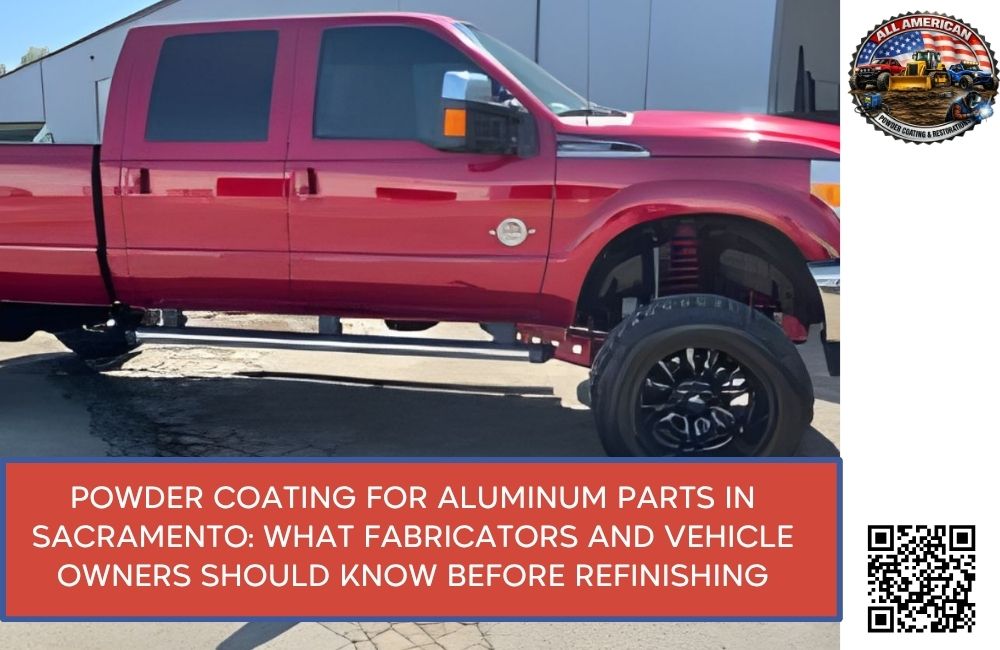
Powder Coating for Aluminum Parts in Sacramento: What Fabricators and Vehicle Owners Should Know Before Refinishing
Powder Coating for Aluminum Parts in Sacramento: What Fabricators and Vehicle Owners Should Know Before Refinishing
Aluminum is widely used in automotive, fabrication, commercial, and outdoor applications because it is lightweight, corrosion-resistant, and versatile. But that does not mean every aluminum part stays attractive or protected forever. Wheels can oxidize, fabricated components can lose their finish, and outdoor metal can become dull, stained, or damaged from repeated exposure.
Professional powder coating can give suitable aluminum parts a durable, clean finish while helping protect the surface from weather, wear, chemicals, and everyday handling. The process, however, requires careful preparation because aluminum behaves differently from steel.
For Sacramento vehicle owners, fabricators, and businesses searching for powder coating near me, understanding the preparation, cleaning, blasting, masking, and curing process can help prevent poor adhesion, surface defects, and unnecessary rework.
What Is Powder Coating for Aluminum?
Powder coating is a dry finishing process in which an electrostatically charged powder is applied to a properly prepared metal surface. The coated part is then cured in an oven so the powder flows into a bonded protective finish.
A professional powder coating service may help suitable aluminum parts resist:
Oxidation
Moisture
Scratching
Chipping
UV exposure
Road grime
Chemicals
General wear
Aluminum does not rust like steel, but it can oxidize and corrode, especially in harsh environments or when the factory finish has been damaged.
Why Aluminum Requires Different Preparation
Aluminum is softer and more reactive than many steel components. That means preparation must be controlled carefully.
A process that works well on heavy steel may be too aggressive for thin aluminum or detailed cast parts.
Oxidation Must Be Removed
Aluminum naturally develops a thin oxide layer. While this layer can provide some protection, heavy oxidation or contamination may interfere with coating adhesion.
The surface must be cleaned and prepared properly before powder is applied.
Aluminum Can Be Damaged by Aggressive Blasting
Too much blasting pressure or the wrong media can:
Distort thin parts
Create excessive surface roughness
Damage edges
Remove fine details
Affect machined surfaces
A qualified powder coating shop near me should choose blasting media and pressure based on the type and thickness of the aluminum.
Which Aluminum Parts Can Be Powder Coated?
Many removable aluminum components may be suitable for refinishing.
Common projects include:
Wheels and rims
Automotive brackets
Valve covers
Engine-bay components
Motorcycle parts
Off-road components
Fabricated brackets
Equipment panels
Aluminum fencing
Gates
Railings
Outdoor furniture
Commercial enclosures
Custom assemblies
The part must be able to tolerate the curing process and should be inspected before refinishing.
Aluminum Wheel Powder Coating
Aluminum wheels are one of the most common powder coating projects.
Factory finishes can deteriorate due to:
Brake dust
Road debris
Moisture
Cleaning chemicals
Curb contact
UV exposure
Oxidation
Professional wheel powder coating can restore suitable aluminum wheels with a durable new finish.
Wheel Inspection Comes First
Before refinishing, wheels should be inspected for:
Cracks
Bends
Deep pitting
Damaged lug holes
Bead-seat damage
Previous weld repairs
Severe corrosion
A cosmetic finish cannot correct a structural problem.
Rims Powder Coating Options
Professional rims powder coating can create finishes such as:
Gloss black
Satin black
Matte black
Silver
Gunmetal
Bronze
Metallic colors
Bright custom shades
Clear-coated finishes
The final finish should match both the vehicle style and the expected level of road use.
Automotive Powder Coating for Aluminum Components
Professional automotive powder coating can also be used on selected aluminum parts beyond wheels.
Common examples include:
Valve covers
Intake components
Brackets
Engine covers
Motorcycle parts
Custom mounts
Off-road components
Heat Exposure Must Be Considered
Some automotive aluminum parts operate near engines, brakes, or other heat sources.
The shop should determine:
Continuous operating temperature
Peak temperature
Chemical exposure
Cleaning requirements
Coating type
A standard decorative powder may not be suitable for every high-temperature application.
The Aluminum Powder Coating Process
A reliable finish begins with a structured preparation process.
Step 1: Inspect the Part
The shop should evaluate:
Metal condition
Oxidation
Cracks
Pitting
Existing finish
Previous repairs
Machined surfaces
Heat-sensitive inserts
Masking requirements
This helps determine whether powder coating is appropriate.
Step 2: Disassemble the Component
Rubber, plastic, seals, bearings, wiring, adhesives, and other heat-sensitive materials generally need to be removed.
Automotive and motorcycle components may require complete disassembly before blasting and curing.
Step 3: Remove the Existing Finish
Old paint, clear coat, or failed powder coating must often be stripped.
Removal may involve:
Chemical stripping
Media blasting
Mechanical preparation
A combination of methods
The process should preserve the aluminum rather than removing excessive material.
Step 4: Clean and Degrease
Used aluminum parts may contain:
Oil
Grease
Brake fluid
Silicone
Fuel residue
Cleaning chemicals
Road contaminants
These materials can become trapped in cast surfaces, seams, or pores.
Thorough degreasing helps reduce coating defects.
Step 5: Media Blast the Surface
Controlled blasting helps remove oxidation and creates a surface profile for adhesion.
The blasting process must be matched to the part. Thin aluminum, decorative pieces, and precision components require more careful handling than heavy cast parts.
Step 6: Outgas or Pre-Bake When Necessary
Cast aluminum can release trapped gases or contaminants when heated.
This process is known as outgassing.
If outgassing occurs after powder is applied, it may cause:
Pinholes
Bubbles
Craters
Uneven texture
Surface defects
Pre-baking or controlled heating before coating may help reduce these problems.
Step 7: Mask Critical Surfaces
Certain areas must remain coating-free, including:
Threads
Bearing seats
Grounding points
Machined surfaces
Gasket surfaces
Mounting locations
Electrical contacts
Professional masking helps prevent fitment or reassembly problems.
Step 8: Apply the Powder
The prepared aluminum is electrically grounded and powder is applied electrostatically.
Coverage should be even across edges, curves, and recessed areas.
Step 9: Cure the Finish
The coated part is heated according to the powder manufacturer’s specifications.
Correct curing is important for:
Adhesion
Gloss
Color
Durability
Chemical resistance
The shop should consider both oven temperature and the actual temperature reached by the part.
Why Outgassing Matters With Aluminum
Outgassing is especially important with cast aluminum parts.
Older wheels, valve covers, and used automotive components can absorb oil, moisture, or other contaminants over time.
When heated, these contaminants may escape through the surface.
How Shops Reduce Outgassing
Depending on the part, preparation may include:
Extended degreasing
Pre-baking
Repeated cleaning
Outgassing-tolerant primers
Controlled curing
No process can guarantee that every porous casting will finish perfectly, but proper preparation significantly reduces the risk.
Aluminum Powder Coating vs. Liquid Paint
Both powder coating and liquid paint can be useful.
Advantages of Powder Coating
Powder coating may provide:
Strong adhesion
Durable coverage
Good chip resistance
Consistent application
Corrosion protection
Multiple color choices
Minimal runs or drips
When Paint May Be Better
Liquid paint may be more practical when:
Exact color matching is needed
The part cannot tolerate curing heat
Multi-color graphics are required
A small repair area needs refinishing
The component is too large for coating equipment
The best option depends on the part, environment, and finish expectations.
Powder Coating Aluminum Gates and Railings
Aluminum gates, fences, and railings are popular because they do not rust like steel, but their finishes can still fade, oxidize, or become damaged.
Powder coating can restore:
Entry gates
Fence panels
Balcony railings
Handrails
Decorative aluminum
Outdoor fixtures
The coating should be selected for outdoor exposure, UV stability, and moisture resistance.
Aluminum Patio Furniture
Cast aluminum and tubular aluminum patio furniture can often be restored rather than replaced.
Suitable pieces may include:
Chairs
Tables
Benches
Lounge frames
Outdoor furniture bases
Professional metal restoration services may include stripping, cleaning, oxidation removal, minor repairs, and refinishing.
A well-built furniture set may have many years of useful life remaining after restoration.
Commercial Powder Coating for Aluminum Fabrication
Fabricators often work with aluminum because it is lightweight, corrosion-resistant, and easy to form.
Commercial powder coating may be used for:
Enclosures
Brackets
Panels
Frames
Equipment housings
Railings
Architectural components
Custom assemblies
Commercial fixtures
Businesses should provide clear information about:
Part dimensions
Aluminum type
Indoor or outdoor use
Color requirements
Gloss level
Masking needs
Quantity
Repeat-order expectations
This helps the coating shop create a consistent process.
Powder Coating for New vs. Used Aluminum Parts
New aluminum and used aluminum can require very different preparation.
New Fabricated Aluminum
New parts may still contain:
Cutting oils
Welding residue
Fingerprints
Surface oxidation
Manufacturing contaminants
They still require proper cleaning before coating.
Used Aluminum
Used parts may contain:
Oil
Road grime
Brake dust
Chemical residue
Deep oxidation
Previous finishes
Embedded contamination
They may require more extensive cleaning, stripping, and outgassing.
What Affects Aluminum Powder Coating Cost?
Pricing may depend on:
Part size
Quantity
Existing finish
Oxidation
Stripping requirements
Blasting time
Degreasing
Outgassing
Masking complexity
Powder selection
Specialty colors
Clear coats
Repairs
Commercial scheduling
A clean new aluminum bracket will generally require less preparation than an oxidized set of used wheels.
How to Choose a Powder Coating Shop in Sacramento
When comparing powder coating Sacramento providers, ask specifically about their experience with aluminum.
Useful questions include:
How is aluminum stripped?
What blasting media is used?
How is oxidation handled?
Are cast parts pre-baked?
How does the shop reduce outgassing?
How are machined areas protected?
Can aluminum wheels be inspected before coating?
Are exterior-grade powders available?
Can commercial batches be handled?
Is pickup and delivery available?
A shop that understands the material can avoid many of the problems caused by aggressive blasting or poor cleaning.
Powder Coating Aluminum Parts Near Sacramento
All American Powder Coating & Restoration provides aluminum powder coating, sandblasting, metal restoration, welding, fabrication, automotive refinishing, and commercial coating from its West Sacramento location.
The shop serves vehicle owners, fabricators, homeowners, contractors, and businesses throughout Sacramento, West Sacramento, Roseville, Elk Grove, Folsom, Rocklin, Citrus Heights, Rancho Cordova, Davis, Woodland, and surrounding Northern California communities.
Projects may include:
Aluminum wheels
Automotive parts
Motorcycle components
Gates
Railings
Patio furniture
Fabricated brackets
Commercial equipment
Custom assemblies
Frequently Asked Questions
Can aluminum be powder coated?
Yes. Many aluminum parts can be powder coated when they are properly cleaned, prepared, masked, and cured.
Does aluminum need sandblasting before powder coating?
It often needs blasting or another surface-preparation method, but the media and pressure must be appropriate for aluminum.
Can aluminum wheels be powder coated?
Yes, if they are structurally sound and properly inspected before refinishing.
Why does powder coating sometimes bubble on aluminum?
Outgassing, contamination, moisture, or poor preparation can cause bubbles or pinholes during curing.
Can oxidized aluminum be restored?
Often, yes. Oxidation can usually be removed if the underlying part remains structurally sound.
Where can I get aluminum powder coating in Sacramento?
All American Powder Coating & Restoration is located at 3959 Commerce Dr, West Sacramento, CA 95691 and serves customers throughout the greater Sacramento region.
Protect Aluminum With the Right Preparation and Finish
Aluminum may resist rust, but it still needs the right preparation and protection when appearance and durability matter.
A dependable finish begins with inspection, stripping, controlled blasting, degreasing, outgassing when necessary, masking, powder selection, and accurate curing. Skipping those steps can lead to poor adhesion, surface defects, or premature finish failure.
For aluminum wheels, automotive components, gates, railings, furniture, fabricated parts, or commercial batches, contact All American Powder Coating & Restoration to discuss the material, finish requirements, and best preparation process.
All American Powder Coating & Restoration
3959 Commerce Dr West Sacramento, CA 95691, United States
Phone: +1 (916) 373-9949
